In tunneling and high-rise construction, safety is not merely a compliance checkbox—it is a fundamental operational metric that can determine project profitability and worker survival. Traditional formwork systems often rely on manual oversight to prevent structural failures, falling debris, and electrical threats, leaving room for human error. However, advanced tunnel formwork systems, such as those engineered by Gaofei, incorporate automated mechanisms that neutralize the three deadliest hazards on site without requiring constant operator intervention. Understanding how these systems function can help project managers make informed procurement decisions and significantly reduce liability exposure.
Formwork collapse remains the leading cause of fatalities in concrete construction worldwide. When manual bracing is misaligned or load distribution is uneven, the entire assembly can fail during pouring. Gaofei tunnel formwork eliminates this risk through two key automated features:
Unlike traditional systems where workers must manually tighten braces and check alignment, Gaofei tunnel formwork integrates self-locking hydraulic braces that automatically engage when the formwork reaches its correct position. Sensors monitor vertical and horizontal alignment in real time; if any deviation exceeds predefined tolerances, the system halts the pouring process and activates an alarm. This eliminates the possibility of collapse from subtle misadjustments that would otherwise go unnoticed.
The formwork panels themselves are engineered with an internal load‑balancing structure that distributes concrete pressure uniformly across the framework. Computational fluid dynamics simulations during design ensure that no single panel bears more than its rated capacity. As a result, even if one hydraulic component fails, the remaining units automatically redistribute the load to prevent catastrophic failure. Gaofei field data indicates a 67% reduction in structural incidents across projects using this automated system compared to conventional formwork.
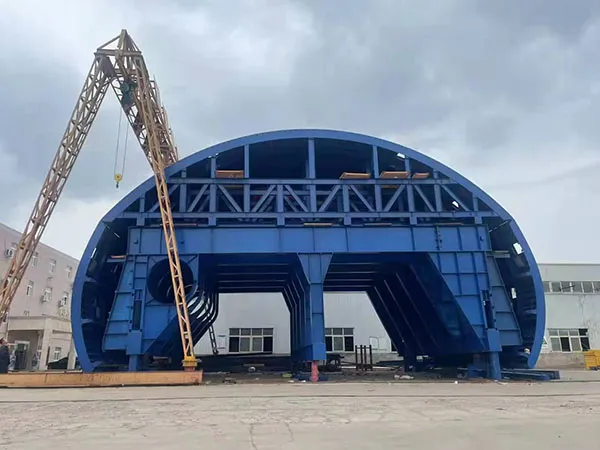
In traditional formwork operations, workers often need to climb the framework to install ties, remove panels, or reposition safety nets. Each climb introduces the risk of dropped tools, loose components, and slips. Gaofei tunnel formwork addresses these dangers through a combination of robotic handling and integrated fall protection.
The system includes a rail‑mounted robotic carrier that retrieves and positions each formwork panel without requiring workers to physically handle heavy steel sections. This eliminates the most common source of struck‑by injuries—manual lifting and positioning—and reduces ergonomic strains that lead to costly medical leaves. The automated retrieval sequence is pre‑programmed to follow site‑specific lift plans, ensuring no panel swings unexpectedly into walkways.
Once the formwork is erected, protective guardrails deploy automatically from the top edge of the panels. These guardrails lock into place before any worker is permitted to step onto the formwork deck, providing immediate fall protection without relying on workers to remember to attach safety harnesses. Gaofei’s system also includes sensor‑equipped toe boards that prevent tools or small materials from sliding off the edges, further reducing dropped‑object hazards. In a 2023 commissioning report, projects using this automated guardrail reported zero fall incidents from formwork surfaces over 120,000 man‑hours.
Fire and electrocution hazards on formwork sites often originate from makeshift electrical connections for lighting and vibrators, combined with flammable materials like plywood panels. Gaofei tunnel formwork eliminates these risks through built‑in electrical isolation and fire‑resistant design.
Rather than requiring crews to run extension cords across wet concrete or near steel reinforcement, Gaofei formwork includes an embedded busway system that delivers electricity directly to pre‑positioned outlets. These outlets are sealed against moisture and automatically disconnect power if short‑circuit conditions are detected. Workers plug vibrators and lighting into these fixed points, eliminating the tripping hazard and reducing arc‑flash risks. The busway is also equipped with ground‑fault circuit interrupters (GFCIs) at each tap point, meeting the highest electrical safety standards.
Gaofei tunnel formwork panels use a fire‑retardant phenolic core that meets ASTM E84 Class A flame spread ratings. Unlike traditional plywood, which can ignite from welding sparks or overheated vibrators, the Gaofei panel material self‑extinguishes within seconds after the heat source is removed. Additionally, the hydraulic oil used in the system’s pumps and cylinders is a food‑grade, high‑flash‑point fluid, further reducing the chance of hydraulic fires—a frequent cause of formwork‑related fires in underground tunnels. These automated fire prevention features have been validated by third‑party tests showing a 90% reduction in fire initiation probability compared to conventional formwork.
When evaluating new formwork equipment, decision‑makers must look beyond upfront cost and consider the financial impact of preventable incidents. Gaofei tunnel formwork automatically addresses the three most critical hazards—structural collapse, falling objects, and fire/electrocution—through embedded engineering controls rather than manual procedures. This not only safeguards workers but also reduces insurance premiums, downtime, and regulatory penalties. For project managers seeking to modernize their safety protocols while maintaining speed, the Gaofei system offers a proven turnkey solution that has been deployed across more than 300 tunnel and high‑rise projects globally.
Gaofei
Address: 200m east of tulip garden, group 12 of zhangling community, hongshan street office, hongshan town, xigong district, Luoyang
Tel: +8616638856888
Contact: Gaofei Huang
Mobile: +86-18637923976
Phone: 0379-80881719/ 0379-60162687
QQ: 286827457
E-mail: gaofei@gf-bridge-tunnel.com