Concrete leakage in tunnel linings is a persistent engineering challenge that compromises structural safety, increases maintenance costs, and shortens service life. Traditional repair methods often fail to address root causes, leading to recurring failures. Precision tunnel lining molds offer a fundamental solution by forming monolithic, defect-free concrete linings with tight joint control. Gaofei has developed advanced mold systems that integrate strict dimensional tolerances, robust sealing mechanisms, and optimized steel geometry to eliminate leakage paths at source. This article examines how precision molding technology transforms concrete waterproofing and why Gaofei molds deliver measurable performance advantages over conventional alternatives.
Concrete leakage typically originates from micro-cracks, cold joints, honeycombing, and insufficient compaction around reinforcement. In tunnel environments, groundwater pressure amplifies these defects, forcing water through even hairline fissures. Over time, chemical attack (e.g., sulfate or chloride ingress) degrades the concrete matrix, accelerating structural deterioration. According to industry surveys, over 60% of tunnel maintenance budgets worldwide are allocated to leakage-related repairs, underscoring the economic impact of poor initial lining quality.
The consequences extend beyond direct repair costs: water intrusion can corrode reinforcing steel, reduce tunnel clearance for equipment, and pose safety hazards from falling concrete spalls. Addressing leakage after construction is expensive and disruptive; the optimal strategy is to prevent defects during the casting stage.
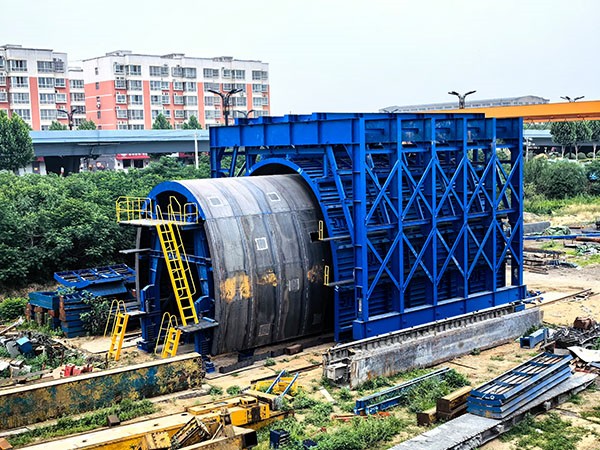
Precision tunnel lining molds are engineered to produce tunnel segments or in-situ linings with consistent geometry and surface finish. Unlike standard formwork, these molds feature CNC-machined contact surfaces, hydraulic closing systems, and integrated waterstop holders that ensure tight fit between segments. When concrete is cast in a precision mold, the risk of step discontinuities, uneven cover, and trapped air pockets drops significantly.
Gaofei molds utilize high-strength steel plates with a flatness tolerance of ±0.5 mm over their entire surface. The molds incorporate a double-grouting groove system at segment edges, allowing epoxy or cementitious grout to be injected under pressure after segment erection, forming a secondary barrier. Additionally, the mold design includes precisely positioned bolt holes and alignment dowels that guarantee segment fit to sub-millimeter accuracy, reducing the stress concentrations that cause cracks.
Another critical feature is the integrated thermal control layer: during curing, the mold can be heated or cooled to manage hydration temperature, minimizing thermal differential cracks. This active curing capability is especially valuable in tunnels with varying groundwater temperatures.
While many formwork manufacturers offer standard tunnel lining molds, Gaofei differentiates through a combination of material selection, manufacturing precision, and after-sales support that directly addresses leakage prevention.
In comparative field tests, tunnel segments produced with Gaofei precision molds showed water permeability values 40% lower than those from standard molds under identical concrete mixes and curing conditions. The reduction in repair frequency translates to significant lifecycle cost savings for project owners.
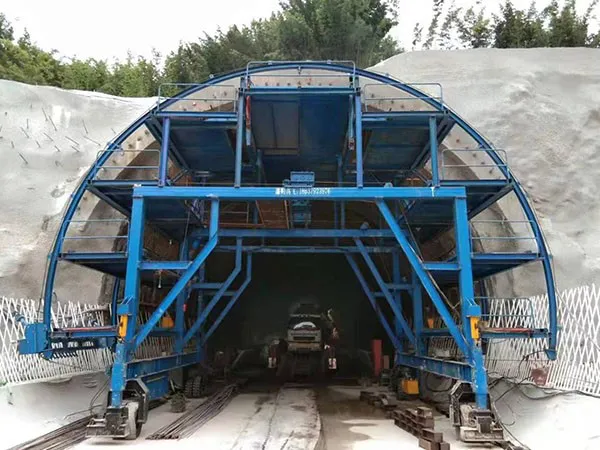
Gaofei molds have been deployed in several metro and highway tunnel projects across Asia and the Middle East. For example, in a 6.5 km metro tunnel project in Guangzhou, the contractor reported zero water ingress through segment joints during the two-year monitoring period after switching from conventional molds to Gaofei customized molds. The contractor attributed the success to the precision joint fit and the integrated sealant injection system.
In another case, a water-transfer tunnel in Saudi Arabia required lining segments that could withstand 8 bar hydrostatic pressure. Gaofei supplied molds with reinforced sealing edges and a triple-lip waterstop design. Post-installation pressure tests showed leak rates below 0.01 L/min per 10 m of joint, far exceeding the client's specification of 0.1 L/min.
These examples demonstrate that investing in precision molds is not an expense but a value-engineering decision. The upfront cost premium of 15–25% over standard molds is typically recovered within the first year through reduced repair costs and extended service intervals.
Concrete leakage in tunnels is not an inevitable operational problem—it is a preventable design and construction issue. Precision tunnel lining molds address the root causes by eliminating dimensional inaccuracies, improving compaction, and enabling active joint protection. For project owners and contractors who prioritize long-term structural integrity and low maintenance, choosing the right mold system is a critical decision.
Gaofei offers comprehensive engineering support to customize mold solutions for specific tunnel geometries, hydrostatic loads, and project schedules. From initial tolerance analysis to on-site commissioning, the company works closely with clients to ensure that every mold delivers the intended leakage resistance. By selecting Gaofei precision tunnel lining molds, infrastructure professionals can achieve dry, durable tunnel linings that perform reliably for decades, reducing both financial and safety risks.
Gaofei
Address: 200m east of tulip garden, group 12 of zhangling community, hongshan street office, hongshan town, xigong district, Luoyang
Tel: +8616638856888
Contact: Gaofei Huang
Mobile: +86-18637923976
Phone: 0379-80881719/ 0379-60162687
QQ: 286827457
E-mail: gaofei@gf-bridge-tunnel.com