Selecting the right tunnel lining formwork system is a critical decision that directly impacts project timeline, safety, and final quality. With increasing demands for faster construction cycles, higher concrete finish standards, and stricter safety regulations, modern systems must go beyond basic steel frames. This article examines the five must-have features that define state-of-the-art tunnel lining formwork systems. Whether you are evaluating suppliers or upgrading existing equipment, these technical characteristics help you differentiate between conventional solutions and truly advanced engineering. Gaofei has integrated these features into its latest product lines, offering measurable benefits for medium and large-scale tunneling projects.
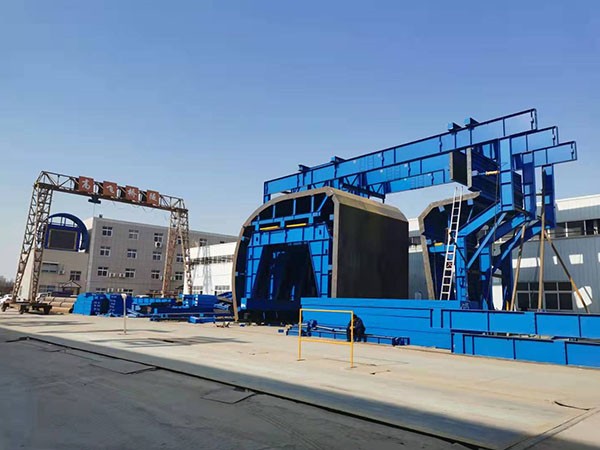
The most time-consuming phase in tunnel lining is the repositioning of formwork from one pour to the next. Traditional crane-assisted movement often takes 6–8 hours per cycle. Modern systems now incorporate hydraulic self-advancing technology that reduces this to under 90 minutes.
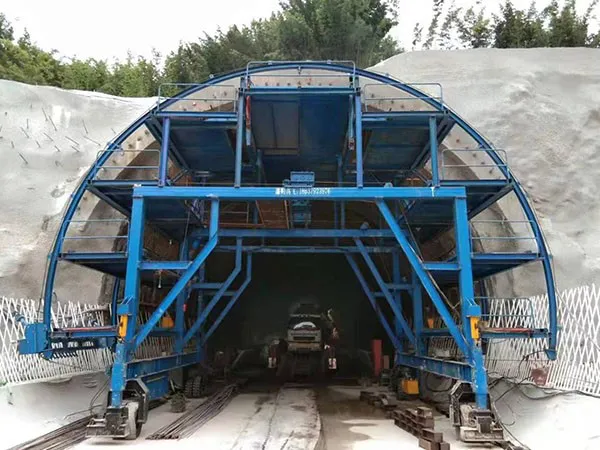
A self-contained traveling carriage with hydraulic cylinders allows the entire formwork assembly to move forward along the tunnel invert without external lifting equipment. Gaofei designs these carriages with fail-safe braking mechanisms and incremental position sensors, ensuring millimeter-level accuracy during repositioning.
Advanced systems sequence the retraction of side panels, lowering of the roof form, and horizontal travel through a single PLC controller. This eliminates misalignment risks and reduces operator training requirements. The hydraulic system should operate at minimal noise levels (below 75 dB) to comply with tunnel working environment regulations.
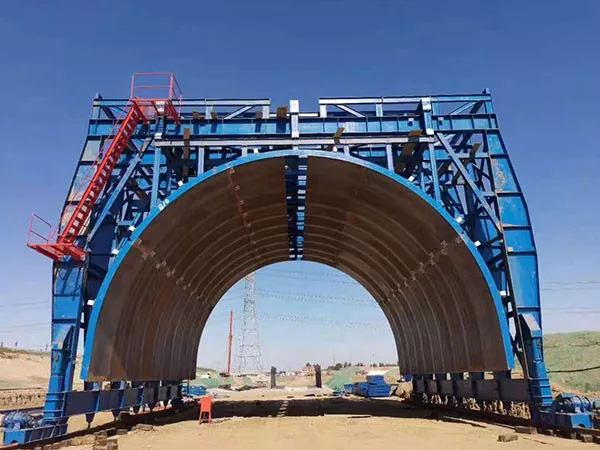
Weight reduction without compromising load capacity is a persistent challenge. A hybrid construction using high-strength aluminum alloys for non-structural panels and steel for main trusses offers the best balance. Gaofei’s modular frames achieve a 35% weight reduction compared to all-steel designs while maintaining a concrete pressure capacity of up to 80 kN/m².
Welded joints are replaced with bolted connection nodes that can withstand 10,000+ assembly/disassembly cycles. Each node features a torque-indicating washer for rapid visual inspection. This design also simplifies site modifications when tunnel cross-section changes occur.
Modern systems apply duplex coating (hot-dip galvanizing plus epoxy topcoat) on all steel components. Gaofei uses a specialized zinc-aluminum-magnesium alloy coating that extends service life by 40% in aggressive groundwater conditions.
Concrete compaction in tunnel lining directly affects waterproofing and durability. Traditional external vibrators mounted on the formwork often create weak zones. The modern solution is an integrated internal vibration system with submerged vibrator rods that operate through guided sleeves in the formwork panel.
Variable-frequency drives (VFD) allow operators to adjust vibration frequency from 8,000 to 12,000 vpm based on concrete slump and cover depth. Sensors embedded in the formwork detect air pockets and automatically adjust vibration duration, reducing honeycombing by over 60%.
To facilitate maintenance, Gaofei designs mounting points that allow a single technician to replace a vibrator unit in 10 minutes without entering the confined space between formwork and tunnel wall.
Overpressure during concrete placement is a primary cause of formwork deformation and failure. Modern systems must include continuous pressure monitoring with integrated relief mechanisms.
At least 12 pressure-rated load cells per 12-meter formwork section transmit data to a central display. Gaofei’s monitoring system triggers a visual and audible alarm when pressure exceeds 85% of rated capacity. The system also records pressure history for quality documentation.
If pressure spikes occur, electronically controlled relief valves instantaneously open to release excess concrete through dedicated ports, preventing panel bulging. This passive safety feature has reduced formwork failure incidents in accelerated construction programs.
Many infrastructure projects now require segments with different cross-sections (e.g., transition zones, cross passages, ventilation niches). Systems that can be reconfigured on-site without factory modifications offer significant cost advantages.
Gaofei’s hinge mechanisms at panel connections allow radius adjustment through interchangeable spacer blocks. Changing from a standard 5.6 m diameter to a 6.2 m diameter takes a 3-person crew less than 4 hours.
Standard formwork sections accept bolt-on insert panels for creating recesses, brackets, or cable ducts. The inserts share the same locking mechanism and surface finish, achieving seamless concrete results without secondary work.
The tunneling industry’s trend toward mechanization, data integration, and adaptability makes these five features essential criteria for any modern tunnel lining formwork system. When evaluating suppliers, request documented performance data on cycle time reduction, pressure monitoring accuracy, and modular flexibility. Gaofei provides technical datasheets and on-site demonstrations for all these features, supporting customers in making an informed investment that aligns with long-term project demands.
Gaofei
Address: 200m east of tulip garden, group 12 of zhangling community, hongshan street office, hongshan town, xigong district, Luoyang
Tel: +8616638856888
Contact: Gaofei Huang
Mobile: +86-18637923976
Phone: 0379-80881719/ 0379-60162687
QQ: 286827457
E-mail: gaofei@gf-bridge-tunnel.com