Achieving zero-defect tunnel linings is the gold standard in underground construction, yet many projects fall short due to inconsistencies in concrete placement, formwork stability, or curing conditions. Every void, crack, or honeycomb not only compromises structural integrity but also leads to costly rework and schedule delays. This article provides a systematic approach to eliminating defects, covering mix design, formwork technology, placement methods, and quality control protocols. By integrating proven techniques and leveraging advanced equipment such as Gaofei‘s tunnel formwork systems, contractors can consistently produce linings that meet the highest standards of durability and appearance.
Zero-defect tunnel lining demands a holistic approach that begins long before concrete is poured. The three pillars are uniform concrete quality, precise formwork geometry, and controlled placement. Without mastering these fundamentals, even the best equipment will not guarantee defect-free results.
The concrete mix must be optimized for workability, low shrinkage, and adequate strength gain. Key parameters include a well-graded aggregate, suitable water-cement ratio, and the use of superplasticizers to achieve high flowability without segregation. For tunnel linings, a slump flow of 600–700 mm is often recommended to ensure complete filling of the formwork cavity, especially around reinforcement and complex sections. Additionally, low-heat cement or supplementary cementitious materials like fly ash can reduce thermal cracking in thick sections.
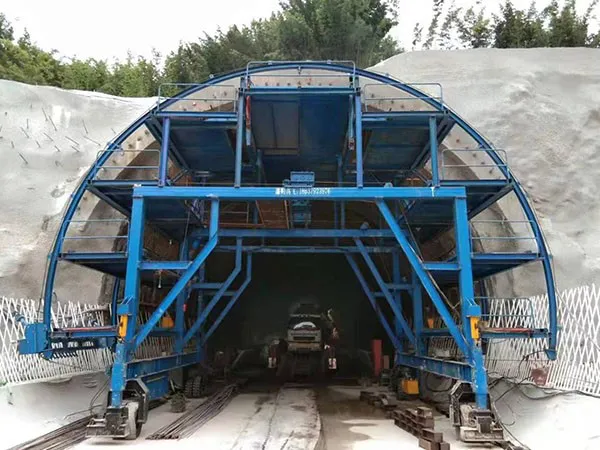
Formwork must be rigid, accurately aligned, and leak-proof. Steel tunnel formwork systems, such as those provided by Gaofei, offer the necessary stiffness and dimensional repeatability to maintain lining thickness and surface finish. During pouring, concrete should be introduced from multiple points using a tremie or concrete pump to avoid cold joints. The placement rate must be controlled to prevent excessive hydrostatic pressure that could displace the formwork.
Immediate and continuous curing is critical. For tunnel linings, wet curing with water sprays or curing compounds should start as soon as the formwork is stripped (typically after 12–16 hours). Temperature monitoring inside the concrete can help manage thermal gradients. Non-destructive testing methods, such as ultrasonic tomography or ground-penetrating radar, can be used to verify internal density and detect hidden voids.
Understanding why defects occur is the first step toward prevention. The most frequent issues include surface voids (bug holes), honeycombing, cracking, and delamination. Each has specific causes that can be addressed through proper technique and equipment.
Surface voids are typically caused by trapped air or water against the formwork face. They become more pronounced when the concrete is poorly vibrated or when the form surface lacks a proper release agent. Honeycombing, on the other hand, results from segregation or insufficient mortar to fill gaps between coarse aggregates. This often occurs near congested reinforcement or when the concrete is placed too quickly without adequate vibration.
Segregation can happen during pumping if the mix is too wet or if the pipeline layout has sharp bends. Once concrete segregates, the coarse aggregates settle while the mortar rises, leading to weak zones. For tunnel linings, where placement is often vertical or overhead, using a pump with a steady flow and a properly designed mix is essential. Gaofei‘s automated concrete pumps include flow-control features that reduce pulsation and minimize segregation risk.
Modern technology bridges the gap between theoretical best practices and on-site reality. Three innovations stand out: advanced formwork systems, real-time monitoring, and high-performance concrete placement equipment.
Full-round tunnel formwork systems manufactured by Gaofei are engineered to maintain precise geometry under repeated use. They feature adjustable hydraulic jacks, robust locking mechanisms, and high-quality steel panels that produce a smooth surface finish. The formwork design allows for sequential stripping and repositioning, enabling efficient cycles without compromising alignment. With these systems, the risk of step offsets or bulging is virtually eliminated.
Sensors embedded in the formwork can track concrete pressure, temperature, and pour height, feeding data to a central control unit. This allows operators to adjust the pour rate or vibration parameters live, preventing overpressure or cold joints. Some systems even integrate with concrete pumps to automatically slow the flow when pressure exceeds a threshold. Gaofei’s smart formwork solutions include optional sensor packages that provide data logs for quality documentation.
For zero-defect linings, the pump must deliver a consistent stream of concrete without surging. Trailer-mounted or truck-mounted boom pumps with variable frequency drives can maintain a smooth flow. Gaofei’s concrete pumps are designed with twin-cylinder technology and optimized S-valves to reduce pressure fluctuations. Combined with properly positioned injection points, they ensure the formwork is filled from the bottom up, pushing air out ahead of the concrete.
Gaofei has a decade-long track record of supplying tunnel construction equipment to projects worldwide. Their approach integrates mechanical precision with process control. Below are the key advantages compared to conventional methods:
By adopting Gaofei’s equipment and the accompanying operational protocols, contractors can reduce defect rates to below 0.5% of lining surface area, as documented by several independent inspection reports.
Technology alone is insufficient without a disciplined execution plan. A zero-defect protocol must cover pre-pour checks, operator training, and continuous improvement.
Before each pour, the formwork should be inspected for cleanliness, proper release agent application, and correct joint sealing. Reinforcement cover and spacing must be verified to ensure concrete can flow freely. The pump and delivery lines should be flushed with a grout slurry to lubricate the system and prevent blockages. Gaofei recommends a standardized checklist that includes these steps, derived from industry standards and field experience.
Consistency comes from well-trained personnel. Gaofei offers on-site training sessions that cover vibration techniques, pour rate control, and troubleshooting common defects. By establishing standard operating procedures (SOPs) for each tunnel segment, crews learn to replicate successful pours. Regular toolbox talks and performance feedback loops further reinforce the zero-defect culture.
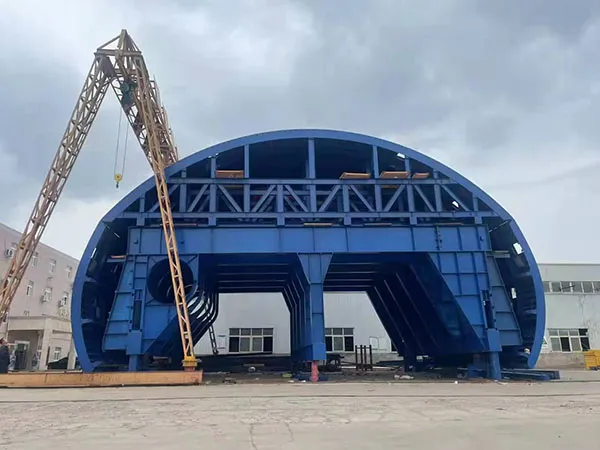
Zero-defect tunnel linings are not a pipe dream but achievable through a combination of sound engineering principles, advanced equipment, and rigorous process control. From the concrete mix design to the final curing stage, every step must be optimized for quality. The formwork system plays a pivotal role, and investing in reliable, purpose-built equipment like that from Gaofei can significantly reduce variability and human error. By implementing the protocols described in this article, tunnel contractors can confidently deliver linings that meet the highest standards of structural performance and aesthetic appearance, project after project.
Gaofei
Address: 200m east of tulip garden, group 12 of zhangling community, hongshan street office, hongshan town, xigong district, Luoyang
Tel: +8616638856888
Contact: Gaofei Huang
Mobile: +86-18637923976
Phone: 0379-80881719/ 0379-60162687
QQ: 286827457
E-mail: gaofei@gf-bridge-tunnel.com