Tunnel lining rework is a costly nightmare—delaying schedules, inflating budgets, and compromising structural integrity. Achieving a flawless, monolithic concrete lining on the first pour is the holy grail of tunneling. The secret lies not in luck, but in formwork design. This article reveals the engineering principles and design secrets that enable zero rework tunnel lining, drawing on Gaofei's decade of experience in providing hydraulic formwork systems to global infrastructure projects. Whether you are a project manager, engineer, or procurement specialist, understanding these design elements will help you make informed decisions that eliminate costly corrections.
Eliminating rework starts with understanding why defects occur. Common culprits include misalignment, deformation under concrete pressure, poor concrete consolidation, and joint leakage. A formwork system designed for zero rework must address each failure mode at the design stage. The fundamental principle is rigid geometry control: every panel, every tie rod, every hydraulic cylinder must work together to maintain the exact tunnel profile under dynamic load.
Over-engineering formwork steel adds unnecessary cost and handling difficulty. Under-engineering leads to deflection and out-of-tolerance shapes. Gaofei's design philosophy uses finite element analysis (FEA) to optimize rib spacing and panel thickness, achieving stiffness-to-weight ratios that prevent deflection while remaining transportable. The result is a formwork that holds its shape during concrete placement, eliminating bulges and surface irregularities that trigger rework.
Manual screw adjustment is the enemy of consistency. Hydraulic formwork allows micrometer-level positioning of each segment. Gaofei incorporates double-acting hydraulic cylinders with proportional control valves, enabling operators to adjust alignment and taper with repeatable accuracy. This hydraulic precision ensures the formed lining respects the design radius within +/- 2mm, a tolerance that conventional mechanical systems simply cannot achieve.
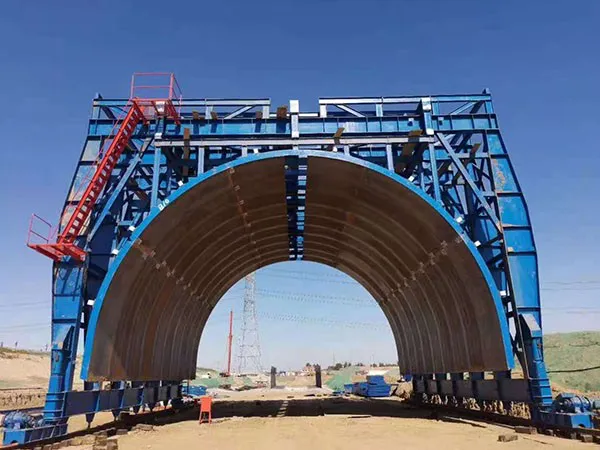
These are not theoretical concepts—they are proven mechanisms embedded in Gaofei's formwork systems. Each secret addresses a specific failure point.
When evaluating formwork for a tunneling project, the decision between conventional systems and zero-rework hydraulic designs has clear quantitative and qualitative differences.
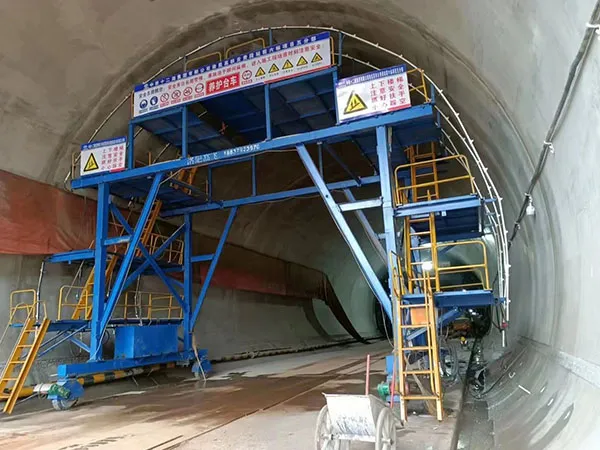
The proof is in the execution. Gaofei's design process begins with a detailed analysis of the tunnel geometry, concrete mix design, placement method, and project schedule. The team creates a 3D model of the formwork assembly and simulates the complete pour cycle—including concrete pressure curves at different lift heights. This simulation identifies potential weak points before fabrication.
During on-site assembly, Gaofei provides a commissioning engineer to calibrate hydraulic pressures and align the first segment. The operator interface displays real-time force readings, allowing immediate correction if a panel begins to deflect. Combined with daily wear inspection protocols (checking seal integrity and guide rail smoothness), the system maintains its zero-rework performance over entire tunnel drives up to 5 kilometers.
A: Yes, when specifications are followed. Zero rework means no grinding, no patching, no structural repairs after concrete cures. Minor surface sanding for cosmetic reasons may be requested by some clients, but structural rework is eliminated entirely.
A: With proper maintenance, the steel structure lasts 15-20 years. Hydraulic cylinders require seal replacement every 3-5 years. Many Gaofei systems have exceeded 2000 pours without any major overhaul.
A: Yes. Gaofei's hydraulic traveler can articulate to radii as tight as 50 meters, using independent cylinder control on inner vs outer forms. This is a key differentiator from rigid box-type formwork.
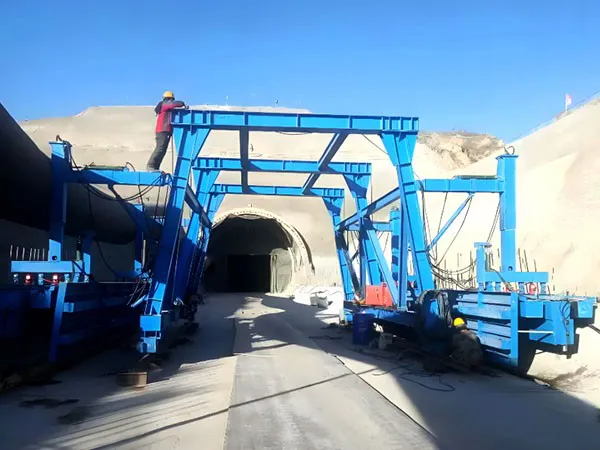
Zero rework tunnel lining is not a marketing slogan—it is an achievable engineering standard when formwork design prioritizes precision, adjustability, and quality from the start. The five secrets shared above represent the accumulated knowledge from hundreds of successful tunnel projects. If your current methods still require touch-up work after each pour, it is time to evaluate the underlying cause. Gaofei invites tunneling professionals to contact our engineering team for a free formwork design audit. With the right design, your first pour can be your last rework.
Gaofei
Address: 200m east of tulip garden, group 12 of zhangling community, hongshan street office, hongshan town, xigong district, Luoyang
Tel: +8616638856888
Contact: Gaofei Huang
Mobile: +86-18637923976
Phone: 0379-80881719/ 0379-60162687
QQ: 286827457
E-mail: gaofei@gf-bridge-tunnel.com