
Selecting the right tunnel formwork system is a critical decision that directly impacts project timelines, budget, and final quality. For civil engineering professionals evaluating forming solutions, the choice between one-piece (full-section) and segmental (incremental) tunnel formwork is often the first crossroads. Each system offers distinct advantages depending on tunnel length, cross-section geometry, site logistics, and production volume. This article provides a technical, unbiased comparison of the pros and cons of both methods, drawing on Gaofei's extensive experience in delivering customized formwork solutions for tunneling projects worldwide. By understanding these differences, you can make an informed decision that balances speed, cost, and structural integrity.
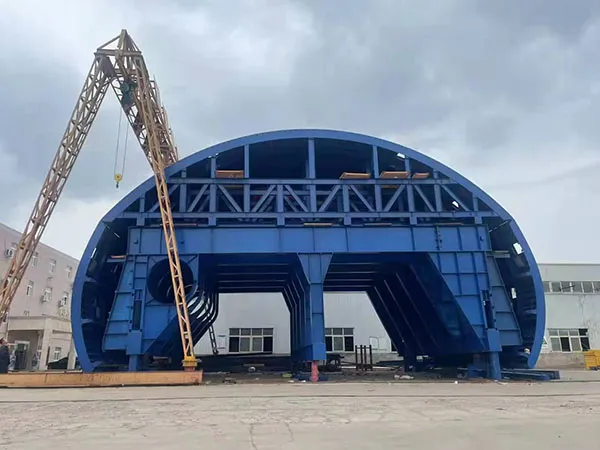
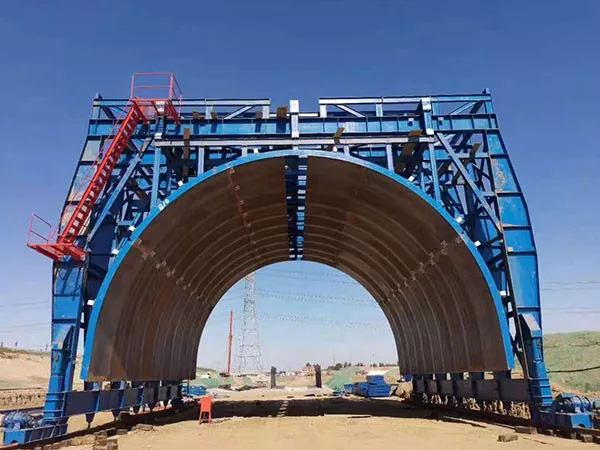
One-piece tunnel formwork consists of a single, rigid steel or aluminum form that matches the entire cross-section of the tunnel. It is typically assembled on-site and moved as a monolithic unit using hydraulic or mechanical systems. In contrast, segmental tunnel formwork divides the cross-section into multiple segments — often a base slab, two side walls, and a top arch — that are installed sequentially. Segments are lighter and easier to handle individually but require more joint connections and alignment adjustments.
One-piece systems are ideal for short to medium tunnels with consistent cross-sections, such as subway stations, pedestrian underpasses, or small road tunnels. Segmental formwork excels in long tunnels, variable geometries, or projects with tight access constraints, where transporting a full-section form would be impractical. Gaofei's engineering team often recommends segmental systems for large-diameter tunnels or those requiring multiple curves and tapers.
The following table summarizes the critical trade-offs across key project parameters:
| Parameter | One-Piece Formwork | Segmental Formwork |
|---|---|---|
| Cycle time per pour | 1–2 days | 2–4 days (due to multiple alignments and joint treatment) |
| Transport weight per unit | 10–50 tons | 2–10 tons per segment |
| Surface finish quality | Excellent (minimal joints) | Good (requires careful joint treatment) |
| Geometry change adaptability | Low (new form required) | High (segment adjustments possible) |
| Initial cost | High (large fabrication) | Moderate (lighter fabrication) |
| Best for tunnel length | < 200 m | > 200 m or variable |
| Assembly labor skill level | Medium (fewer connections) | High (precise alignment of many joints) |
No single formwork system dominates all scenarios. Based on Gaofei's decades of engineering experience, the optimal choice depends on a careful evaluation of the following factors:
Gaofei's engineering team typically conducts a feasibility study that includes formwork weight, transport routes, crane capacity, concrete pouring sequence, and stripping time. Our goal is to align the formwork design with the project's specific constraints rather than pushing a one-size-fits-all solution.
Both one-piece and segmental tunnel formwork systems have proven track records in infrastructure projects worldwide. The decision ultimately hinges on prioritizing speed vs. flexibility, initial investment vs. repetitive cost savings, and logistical simplicity vs. geometric adaptability. For projects where high repetition and tight tolerances are paramount, one-piece formwork often prevails. For long, complex, or logistically constrained tunnels, segmental formwork offers pragmatic advantages. Gaofei's expertise lies in customizing either system — or a hybrid approach — to match your project's unique demands. We recommend engaging experienced formwork engineers early in the design phase to conduct a value engineering analysis that weighs all these factors. By doing so, you can achieve the optimal balance of cost, quality, and schedule for your tunnel construction.
Gaofei
Address: 200m east of tulip garden, group 12 of zhangling community, hongshan street office, hongshan town, xigong district, Luoyang
Tel: +8616638856888
Contact: Gaofei Huang
Mobile: +86-18637923976
Phone: 0379-80881719/ 0379-60162687
QQ: 286827457
E-mail: gaofei@gf-bridge-tunnel.com