
In the production of precast concrete tunnel segments, cracking remains one of the most persistent quality challenges. Even minor hairline cracks can compromise structural integrity, reduce service life, and lead to costly rework. While many factors contribute to cracking—from mix design to curing—temperature management during the molding process is frequently overlooked. This article examines how temperature-controlled tunnel molds offer a systematic solution to prevent cracking, and how Gaofei specializes in engineering such molds to achieve consistent, defect-free outcomes.
Cracking in concrete tunnel segments is rarely caused by a single factor. However, the most common root cause is an excessive temperature gradient between the core and the surface of the fresh concrete. When concrete hydrates, heat is released internally. In a standard mold without temperature control, the outer layers cool faster while the core remains hot, creating differential expansion and contraction. This thermal stress exceeds the early-age tensile strength of concrete, resulting in cracks.
Additionally, rapid cooling after stripping can introduce shock. Traditional molds made of steel or concrete have high thermal conductivity, but without active control, they amplify temperature differences. Temperature-controlled tunnel molds are designed to maintain a uniform thermal environment, reducing the gradient to within safe limits (typically below 20°C). This single intervention can eliminate up to 80% of early-age cracks observed in field studies.
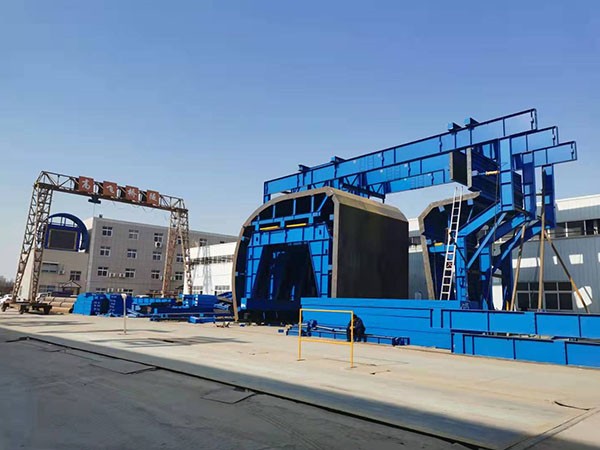
Gaofei’s temperature-controlled molds incorporate embedded fluid channels that circulate temperature-regulated water or oil. By adjusting the inflow temperature and flow rate, the mold surface can be precisely heated or cooled to match the curing curve of the concrete. This active regulation ensures that the entire segment cures at a uniform rate, even in large or complex geometries.
Modern systems include embedded thermocouples connected to a PLC controller. Data from multiple points on the mold surface and within the concrete guide adjustments every few seconds. This closed-loop control prevents overshooting, which can occur with manual or timer-based methods. The result is a consistent thermal history from pour to demolding.
Compared to standard molds or passive insulation methods, Gaofei’s temperature-controlled solutions offer distinct benefits that directly address cracking and productivity concerns:
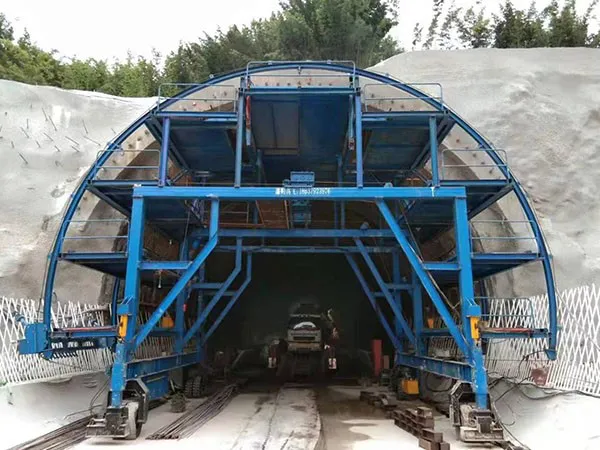
Transitioning from conventional molds to temperature-controlled systems requires upfront investment, but the return on quality improvement is substantial. Gaofei recommends the following steps for successful deployment:
Gaofei provides turnkey installation, including mold design, control system programming, and on-site commissioning. Their experience with large tunnel projects—such as metro lines and hydraulic tunnels—demonstrates the reliability of their approach.
Preventing cracking is not just about improving concrete formulas; it requires fundamental control over the environment in which concrete sets. Temperature-controlled tunnel molds address the root cause of thermal stress, offering a repeatable, data-driven method for producing crack-free segments. Gaofei’s expertise in customizing such molds for specific project needs ensures that clients achieve higher first-pass yield, lower rejection rates, and longer structural service life. As infrastructure projects demand ever tighter tolerances and faster delivery, adopting thermal regulation in molding is no longer optional—it is an engineering imperative.
Gaofei
Address: 200m east of tulip garden, group 12 of zhangling community, hongshan street office, hongshan town, xigong district, Luoyang
Tel: +8616638856888
Contact: Gaofei Huang
Mobile: +86-18637923976
Phone: 0379-80881719/ 0379-60162687
QQ: 286827457
E-mail: gaofei@gf-bridge-tunnel.com