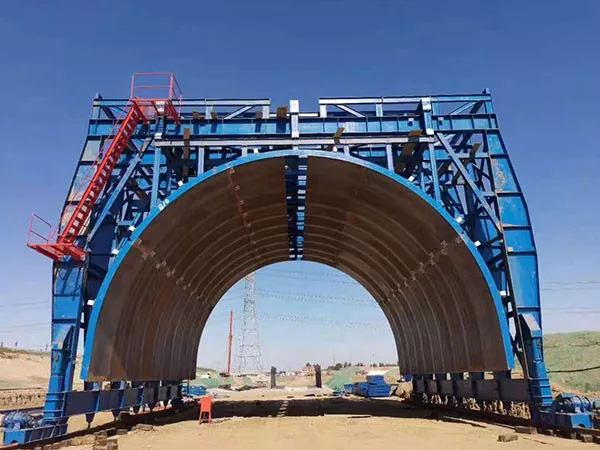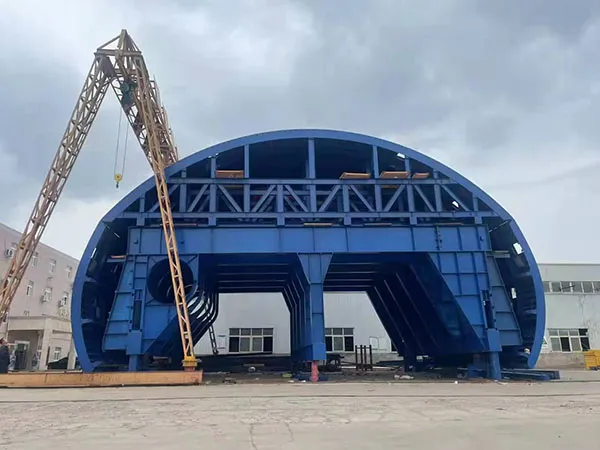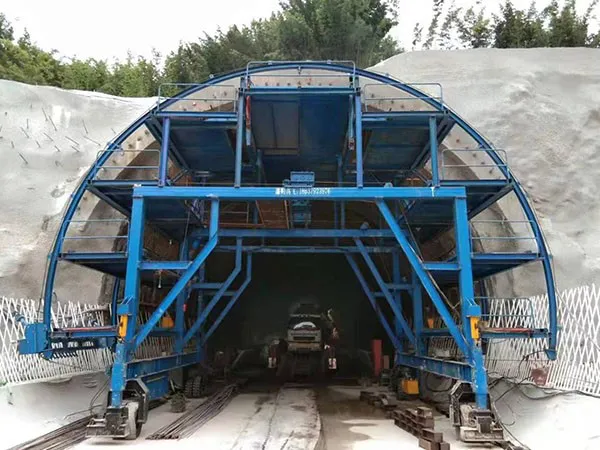

In modern infrastructure development, tunnel construction has become one of the most demanding engineering disciplines, particularly as urban transportation networks, underground logistics corridors, and hydroelectric systems continue to expand. Among all construction components, tunnel formwork plays a decisive role in shaping structural accuracy, long-term durability, and construction efficiency. The precision engineering behind tunnel formwork dimensions is not simply a technical requirement; it is a fundamental condition that determines whether a project can achieve safety, alignment stability, and cost control over its entire lifecycle.
This article explores how precision engineering is applied to tunnel formwork systems, why dimensional accuracy is critical, and how advanced manufacturing and installation practices ensure consistent results in complex underground environments.
Tunnel formwork is the temporary or semi-permanent structural system used to shape concrete during tunnel lining construction. It defines the internal geometry of the tunnel, controls the surface quality of concrete, and ensures that structural loads are evenly distributed during curing.
In practical engineering applications, tunnel formwork is expected to maintain strict dimensional stability under multiple constraints, including concrete pressure, temperature variations, vibration during pouring, and continuous reuse cycles. Any deviation in dimensions, even at a millimeter level, can lead to cumulative alignment errors across long tunnel sections.
Because modern tunnels often extend for several kilometers, precision engineering is essential not only for individual segments but also for the continuity of the entire structure.
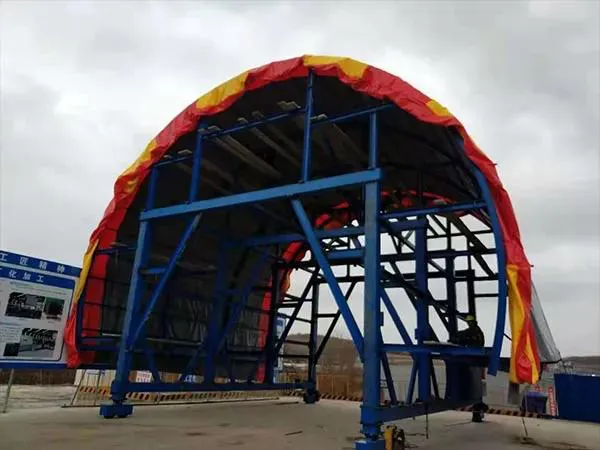
Precision in tunnel formwork dimensions directly affects several critical aspects of construction performance.
First, structural integrity depends heavily on geometric consistency. When formwork dimensions are inaccurate, the resulting concrete lining may experience uneven stress distribution. Over time, this can contribute to cracking, deformation, or reduced load-bearing capacity.
Second, installation efficiency is closely linked to dimensional accuracy. Contractors working in confined underground spaces rely on formwork systems that can be assembled quickly and aligned correctly without excessive adjustment. Poor dimensional control increases installation time and labor costs while reducing overall project efficiency.
Third, alignment accuracy plays a crucial role in multi-section tunnel projects. Modern tunneling methods such as NATM (New Austrian Tunneling Method) or segmental lining systems require precise connection between consecutive sections. Even minor deviations in formwork geometry can cause misalignment, which becomes increasingly difficult to correct as the tunnel progresses.
Finally, surface quality is also influenced by precision engineering. A well-calibrated formwork system produces smoother concrete finishes, reducing the need for post-processing and improving long-term durability against water ingress and environmental exposure.
The design of tunnel formwork systems is based on a combination of mechanical engineering, material science, and geometric modeling. Engineers must ensure that every component maintains strict tolerances while also being robust enough to withstand repeated use.
One of the primary design principles is structural rigidity. The formwork must resist deformation under fresh concrete pressure, which can vary significantly depending on pouring height and mix composition. To achieve this, engineers use reinforced steel frames and optimized support ribs that distribute load evenly across the structure.
Another essential principle is modular accuracy. Modern tunnel formwork systems are often designed in modular sections to allow flexibility in different tunnel diameters and shapes. Each module must be manufactured with high precision so that it can seamlessly connect with adjacent units without creating gaps or misalignments.
Thermal stability is also considered during design. Underground environments can exhibit varying humidity and temperature conditions, which may cause material expansion or contraction. High-quality engineering accounts for these variables to ensure that dimensional accuracy is maintained throughout the construction cycle.
The manufacturing of tunnel formwork requires advanced CNC machining, laser cutting, and precision welding techniques. Each component is produced under strict tolerances, often within millimeter or sub-millimeter accuracy ranges depending on project specifications.
During production, quality control is implemented at multiple stages. Engineers typically begin with raw material inspection to ensure that steel or aluminum components meet mechanical strength requirements. After fabrication, dimensional verification is carried out using coordinate measuring systems and laser alignment tools.
Surface treatment is another important stage. Anti-corrosion coatings and wear-resistant finishes are applied to extend service life, especially in environments where moisture and chemical exposure are common.
Before delivery, full assembly testing is often conducted to simulate real construction conditions. This process allows engineers to identify potential misalignments or structural weaknesses before the formwork is deployed on site.
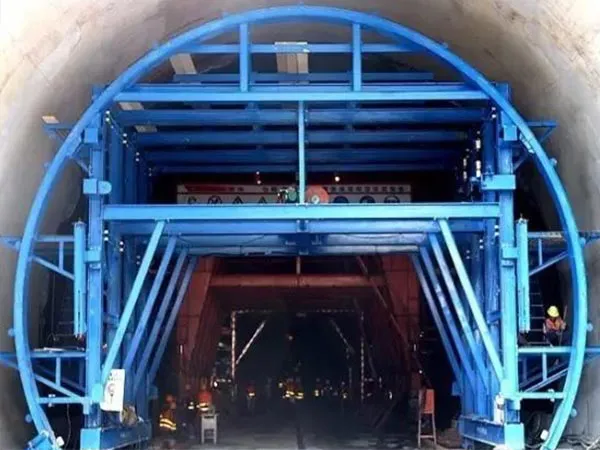
Even the most precisely manufactured formwork system can fail to perform correctly if installation is not properly executed. On-site accuracy is therefore an extension of manufacturing precision.
During installation, engineers must ensure that the base support structure is perfectly leveled. Any deviation at this stage can multiply across the entire tunnel section. Alignment systems such as laser guidance tools and digital measuring instruments are commonly used to maintain accuracy.
Another challenge is environmental constraint. Tunnel construction often takes place in confined, low-visibility, and high-moisture environments. These conditions require careful planning and experienced technical supervision to ensure that formwork components are assembled correctly.
Furthermore, repeated use of formwork systems introduces wear-related dimensional changes. Engineers must regularly inspect and recalibrate the system to ensure that cumulative deviations do not exceed allowable tolerances.
Recent advancements in digital engineering have significantly improved the accuracy of tunnel formwork systems. Building Information Modeling (BIM) allows engineers to simulate tunnel geometry before construction begins, ensuring that formwork dimensions are optimized for real-world conditions.
Laser scanning technology is also widely used to verify tunnel alignment during and after installation. This provides real-time feedback that allows engineers to make immediate adjustments if deviations are detected.
In addition, automated manufacturing systems reduce human error during production. Computer-controlled machinery ensures that every component is produced according to exact specifications, improving consistency across large-scale projects.
These technologies collectively contribute to a higher level of precision engineering, reducing risk and improving overall construction reliability.
Precision-engineered tunnel formwork is widely used in transportation infrastructure such as subway systems, highway tunnels, and railway corridors. It is also essential in hydropower projects, underground storage facilities, and urban utility networks.
The long-term value of precise formwork systems becomes evident in reduced maintenance costs and improved structural longevity. When tunnels are constructed with high dimensional accuracy, they require fewer repairs and demonstrate better resistance to environmental stress factors such as groundwater pressure and seismic activity.
From an economic perspective, precision engineering also contributes to cost efficiency. Although initial investment in high-quality formwork systems may be higher, the reduction in rework, delays, and maintenance costs results in significant long-term savings.
Precision engineering for tunnel formwork dimensions is not merely a technical requirement but a foundational element of modern underground construction. It ensures that structural geometry remains consistent, installation processes remain efficient, and long-term performance meets safety expectations.
As infrastructure projects continue to grow in scale and complexity, the demand for highly accurate, durable, and technologically advanced formwork systems will continue to rise. Companies that invest in precision manufacturing, digital integration, and strict quality control are better positioned to deliver reliable solutions for global tunnel construction projects.
Ultimately, the success of any tunnel project depends on how well precision is maintained from design to installation. In this sense, tunnel formwork is not just a temporary structure—it is the geometric backbone that defines the integrity of the entire underground system.
Gaofei
Address: 200m east of tulip garden, group 12 of zhangling community, hongshan street office, hongshan town, xigong district, Luoyang
Tel: +8616638856888
Contact: Gaofei Huang
Mobile: +86-18637923976
Phone: 0379-80881719/ 0379-60162687
QQ: 286827457
E-mail: gaofei@gf-bridge-tunnel.com