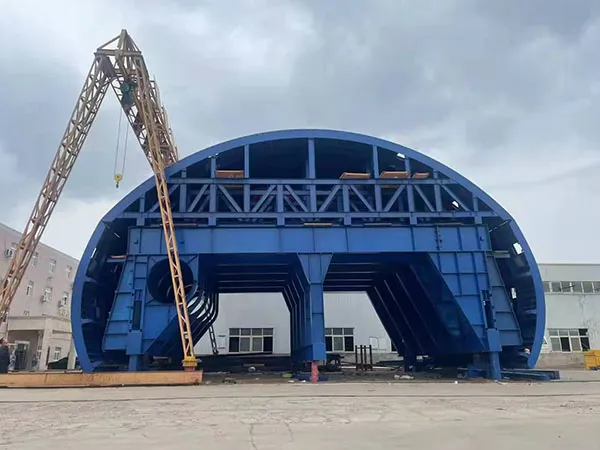
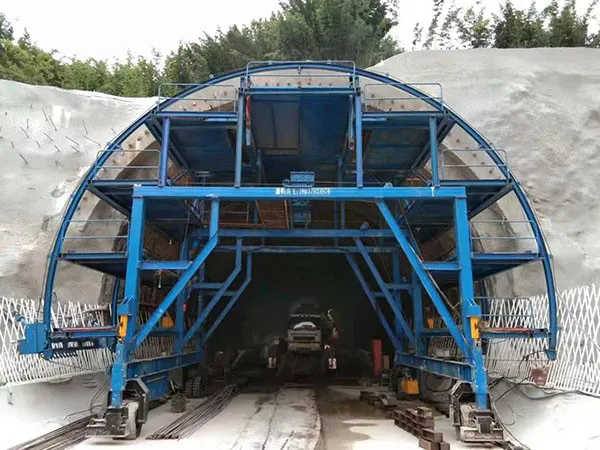
In tunnel construction, the choice between hydraulic jacks and screw jacks for formwork positioning can determine the difference between a project that stays on schedule and one that incurs costly delays. Speed is not merely a convenience; it directly affects labor costs, equipment utilization, and the overall critical path of tunneling operations. This article provides a rigorous, data-driven comparison of hydraulic and screw jack tunnel formwork systems, focusing on operational speed and cycle time efficiency. By understanding the mechanical principles and real-world performance of each system, you will be better equipped to select the right solution for your next project. Gaofei, a trusted name in formwork technology, offers both hydraulic and screw jack systems, and this analysis will help you weigh the trade-offs in the context of your specific tunnel geometry and production targets.
Before comparing speed, it is essential to understand how each system operates within a tunnel formwork setup. The jack is the actuator that moves the formwork panels into position, holds them against the concrete pour, and later retracts to allow stripping.
Hydraulic jacks use pressurized fluid (typically oil) to generate linear force. In tunnel formwork, they are usually controlled by a central pump unit with directional valves. A single operator can actuate multiple jacks simultaneously, achieving uniform movement across the entire formwork section. The stroke length can be long (500–1000 mm) without mechanical disassembly, and the speed of extension/retraction is governed by pump flow rate and cylinder bore. Modern hydraulic systems can achieve travel speeds of 100–300 mm per minute under load, with precise positional control within ±1 mm using flow-control valves or servo valves.
Screw jacks rely on a threaded shaft rotated by a hand crank or electric motor. Each jack must be operated individually. Even with motorized versions, the rotation is typically sequential rather than simultaneous. The mechanical advantage of the screw thread provides high holding force without energy input when the jack is static, but the speed of adjustment is limited by the lead of the screw (distance traveled per revolution) and the rotational speed of the input. Typical screw jack travel speeds range from 20 to 60 mm per minute when motorized, and significantly slower when manually cranked. Moreover, coordinating multiple screw jacks to achieve uniform movement requires multiple workers or a staged process that adds to the total cycle time.
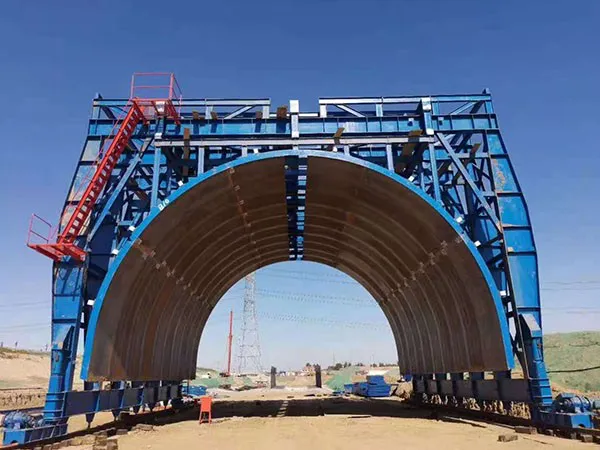
The most critical metric for tunnel formwork speed is cycle time — the total time required from stripping the cured concrete to resetting the formwork for the next pour. The jack operation is only one component, but it influences stripping time, traveling time, and repositioning accuracy.
Field data from multiple tunnel projects indicate that a fully hydraulic formwork system can achieve a total cycle time of 6–8 hours per 12 m pour (including concrete curing time), whereas a screw jack system with motorized jacks typically achieves 10–14 hours for the same geometry. The difference becomes more pronounced when rapid curing accelerators are used, as the formwork stripping and resetting becomes the bottleneck in a screw jack system.
Over a 500 m tunnel (42 pours of 12 m each), the hydraulic system saves approximately 4 hours per pour compared to motorized screw jacks. That equals 168 hours of labor and equipment time — roughly 21 working days. When considering a 24/7 operation, the project completion can be accelerated by three to four weeks. These numbers become even more dramatic when comparing hydraulic to manual screw jacks, where the savings can exceed six weeks.
Speed is not just about the jack itself; it cascades through the entire construction schedule. Faster formwork cycle times allow more efficient use of concrete batching plants, reducing idle time for concrete pumps. Crews can be smaller because hydraulic systems require fewer operators — one person can control the entire formwork from a remote pendant. This reduces labor costs and improves safety (fewer workers near moving machinery).
However, screw jacks offer advantages in certain scenarios:
Despite these exceptions, for any medium-to-large tunnel project (>300 m length) with consistent cross-section, the speed advantage of hydraulic jacks from Gaofei translates directly to lower total project cost, even after accounting for higher initial investment and maintenance.
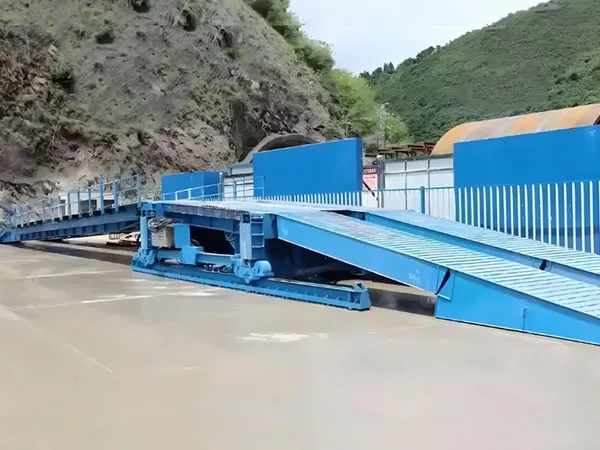
Gaofei has engineered both hydraulic and screw jack systems specifically for tunnel formwork applications. Our hydraulic jacks feature double-acting cylinders with built-in load holding valves, ensuring both speed and safety. The pump unit is designed for continuous operation in dusty tunnel environments, with remote control that allows one operator to manage up to 24 jacks simultaneously. For clients who prefer screw jacks, Gaofei offers motorized units with a quick-release coupling system that reduces the time per turn, along with ergonomic handles for manual backup.
Regardless of the system chosen, Gaofei provides comprehensive cycle time modeling during the design phase to help you predict productivity accurately. We also offer on-site training to ensure your crew can achieve the maximum speed potential of the equipment.
The choice between hydraulic and screw jack tunnel formwork should be driven by the project's scale, schedule constraints, and budget. If speed is your priority — and for most tunneling projects, time is the most valuable resource — a hydraulic system from Gaofei will deliver up to 40% faster cycle times compared to motorized screw jacks, with lower labor requirements and improved alignment accuracy. For short tunnels or where capital cost is the sole constraint, screw jacks remain a viable option. Gaofei can help you make the right decision by providing detailed site-specific cycle time simulations. Contact our engineering team to discuss your tunnel formwork needs and receive a free speed analysis.
Gaofei
Address: 200m east of tulip garden, group 12 of zhangling community, hongshan street office, hongshan town, xigong district, Luoyang
Tel: +8616638856888
Contact: Gaofei Huang
Mobile: +86-18637923976
Phone: 0379-80881719/ 0379-60162687
QQ: 286827457
E-mail: gaofei@gf-bridge-tunnel.com